

News

“Imagining Otherwise”—Margot Van den Eeckhout
Discussions of neurodiversity often revolve around recognition and representation. Institutions ask how neurodivergent people can be accommodated for example, and researchers investigate how neurological differences can be better understood. While these questions are undoubtedly important, they still tend to position neurodiversity as an existing condition that requires special management, explanation, inclusion… The approach presented by…
Read more
[TiM Recap] “A Neurodiverse Fabulation: Techniques for Neurodiverse Futurities”—Aion Arribas and antje nestel (shy*play)
by Agata Kok The seminar led by the collective shy*play consisted primarily of a presentation by Aion Arribas and antje nestel, who shared a story of how their collective engages with neurodiversity. Usually, their activities take form of workshops and participatory installations, involving fabrics and actions that challenge the neurotypical norms of communication, allowing for…
Read more
“Chipping Away at Institutional Brick Walls” — Ani Encheva
How might neurodiversity be practiced intersectionally within educational, performing arts, and visual arts institutions? What “techniques of participation” – that is, techniques that seek to transform the processes through which body-minds are formed – might make it possible for neurodiversity to inhabit a space-time beyond the confines of neurotypical regimes? How might such techniques of…
Read more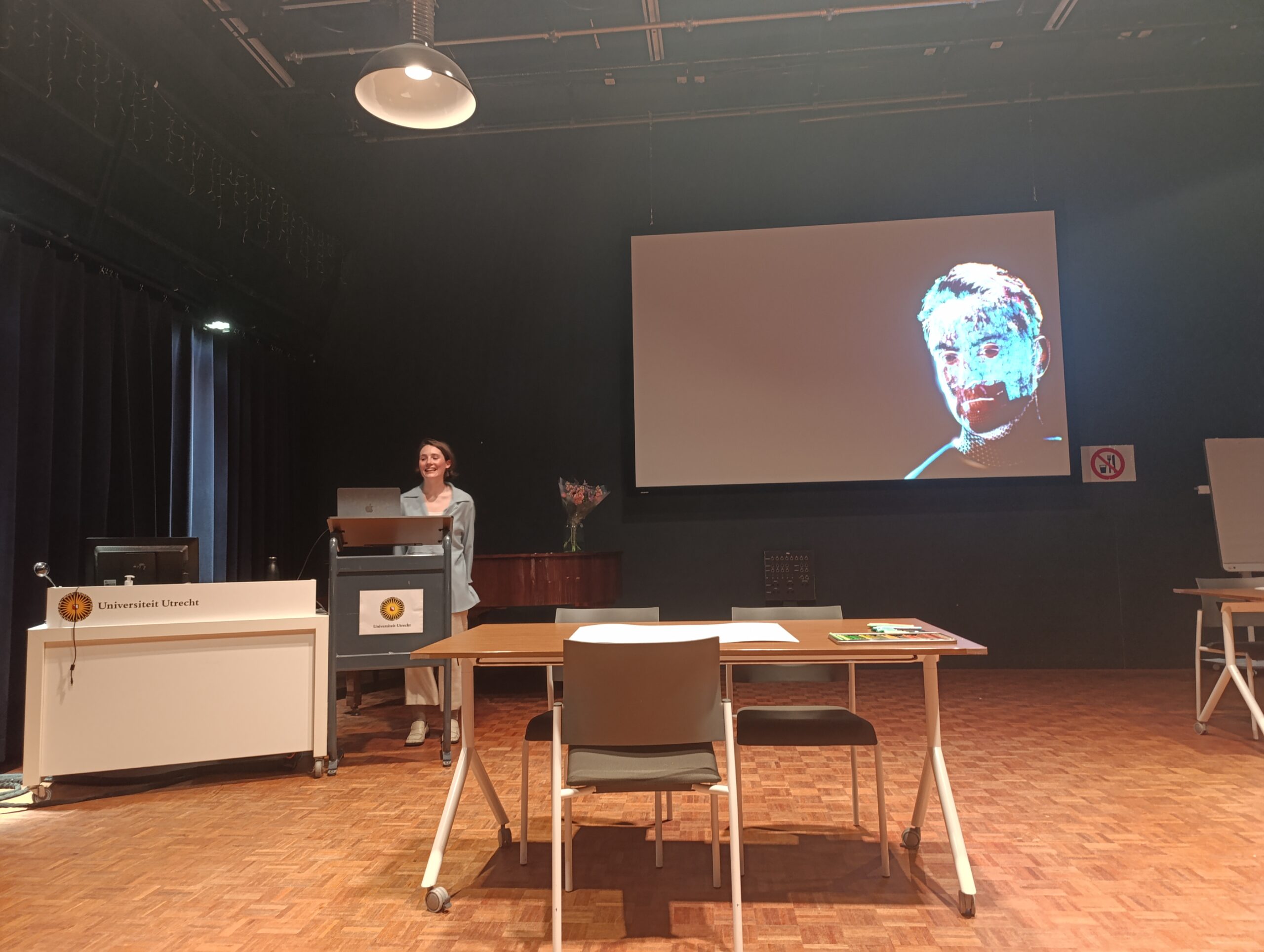
[TiM Recap] “Griefbots in Research and on the Stage”—Ulrike Quade (Ulrike Quade Company), Sorcha Ní Bhraonáin (Ulrike Quade Company), and Evelyn Wan (Utrecht University)”
by Tom Watkins This seminar “Griefbots in Research and on Stage” explored the relationship between grief, digital technologies, and performance through the theatre production Roman & ELIZA by Ulrike Quade Company. The session consisted of three presentations, followed by a participatory artistic planning exercise and a concluding discussion. Sorcha Ní Bhraonáin opened by situating griefbots…
Read more
“From As If to What If to Activate Hope in and for the Otherwise-Possible” — Ani Encheva
From the as if of the staged world toward the posing of what if questions about that world and other possible worlds – this was the journey that the audience was taken on during the Transmission in Motion seminar “From As If to What If: Simulation and Speculation in Contemporary Dramaturgy” led by Dr. Liesbeth…
Read more
“Rehearsal for the Future” – Thorn Austin
Theatre and performance have always been a gathering space throughout many different cultures and times. This is because historically, theatre has worked as a force that connects people: whether for sharing knowledge between community members, rehearsing future life events or introducing others to a new idea. In this view, performances can be understood not just as…
Read more
“Phobiarama and the Discomfort of Real Fear” — Margot Van den Eeckhout
In line with the examples cited by Liesbeth Groot Nibbelink and Sigrid Merx during the discussion of their new book, “From As If to What If: Simulation and Speculation in Contemporary Dramaturgy”, I was reminded of Phobiarama by Dries Verhoeven. This performance does not simply present itself as something other than theatre. The performative installation…
Read more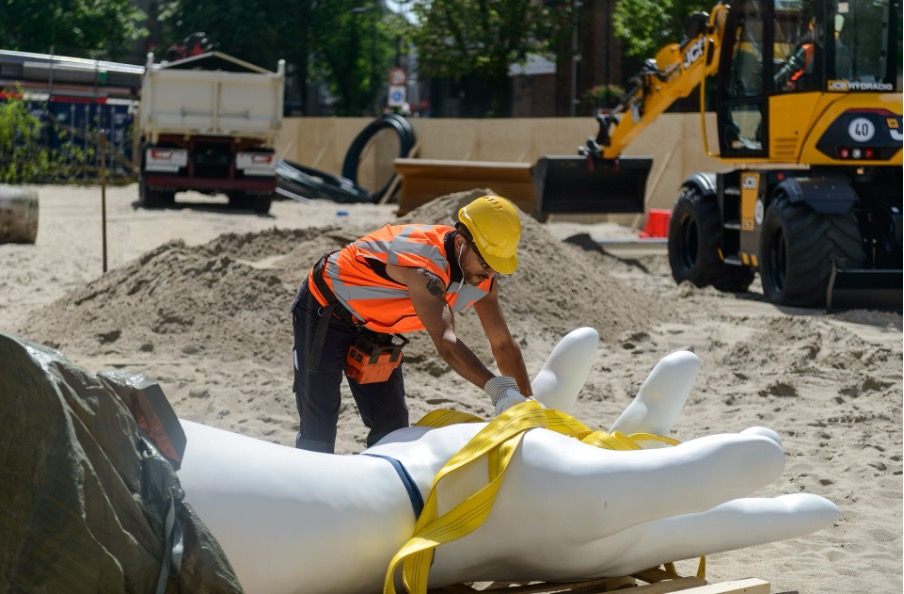
[TiM Recap] “From As If to What If: Simulation and Speculation in Contemporary Dramaturgy” – Liesbeth Groot Nibbelink (Utrecht University) and Sigrid Merx (Utrecht University)
by Jilke van der Kolk Structure and Format of the Seminar This seminar consisted primarily of a lecture-style presentation by Liesbeth Groot Nibbelink and Sigrid Merx, followed by an extended question-and-answer session with participants. The presentation offered a preview of their forthcoming book Simulation, Speculation and Futurity in Contemporary Dramaturgy: From ‘As If’ to ‘What…
Read more
Meet the Makers: Samah Hijawi
In this Meet the Makers conversation, we will engage in conversation with multi-media artist, astrologer and dramaturg Samah Hijawi. Hijawi has been involved as a dramaturg in the creation process of Khadija El Kharraz Alami’s SHRINE, an immersive performance about grief, rage, and radical resistance, presented at Spring Festival 2026. We will talk about the…
Read more
“Unified Estonia and the Performance of Political Reality” — Tom Watkins
What struck me most in the seminar by Liesbeth Groot Nibbelink and Sigrid Merx was not simply the theatricality of Unified Estonia, but the unsettling precision with which it staged the conditions that make political reality believable. Rather than parodying politics from a distance, the project operated as if it were a real political party—complete…
Read more