
Documentation
“When Institutional Critique Works — and Still Feels Unfinished” — Tom Watkins
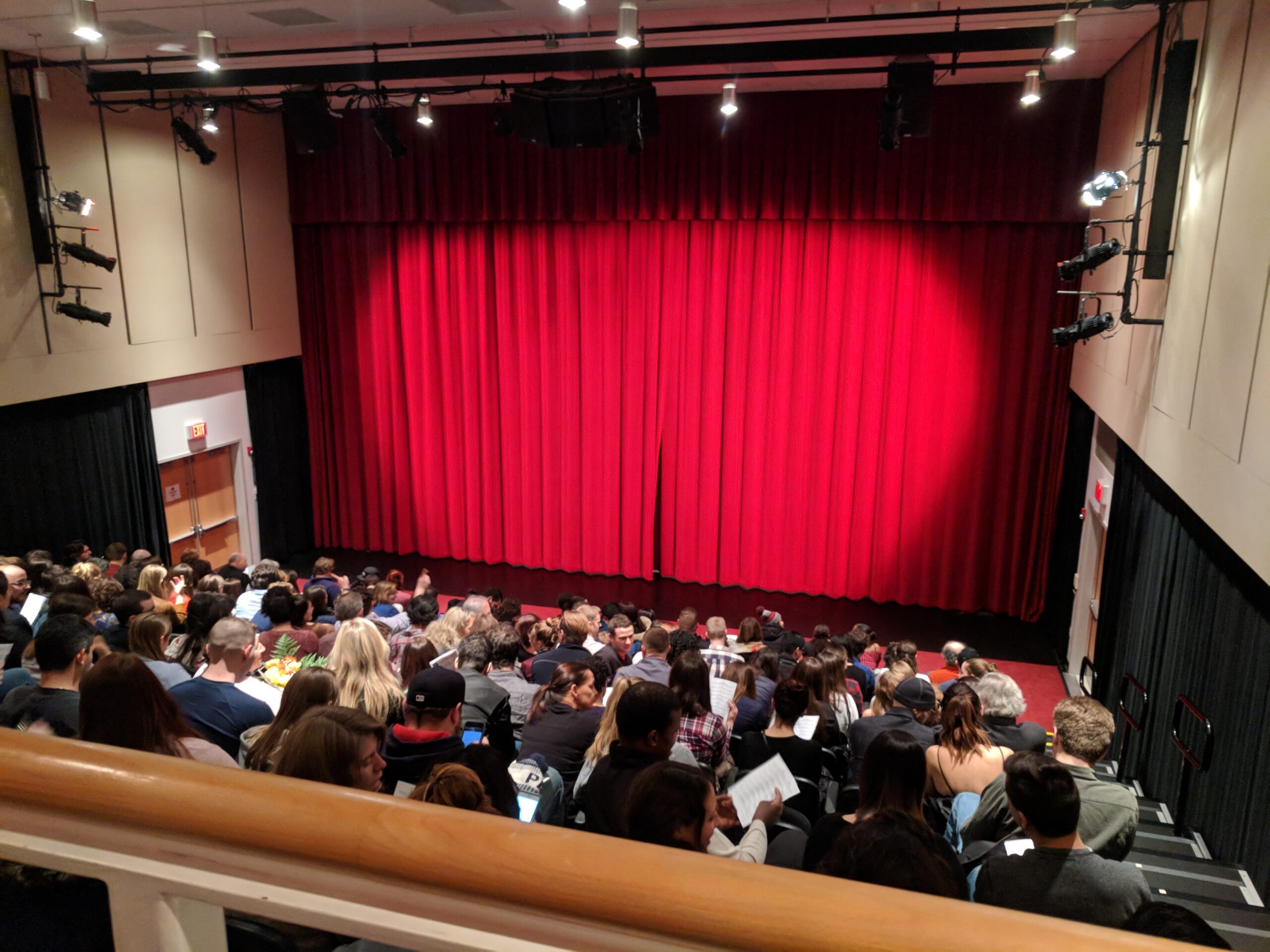
Kurt Kaiser. 2018. Theater Show. Source: Wikimedia Commons.
One of the questions that stayed with me after the Transmission in Motion seminar On Institutionalizing Differently was not whether institutions can be changed from within, but what it means when such attempts seem to work. In the conversation between Anne Breure, Liesbeth Groot Nibbelink, and Maaike Bleeker, institutions appeared less as fixed structures and more as ongoing processes—shaped through everyday decisions, compromises, and negotiations.
Breure’s reflections made this especially clear. Rather than approaching theatre as a space that stands outside politics, her work seems grounded in the idea that institutions can be adjusted and reworked from within. This perspective came into focus through her discussion of the Veem Theater in Amsterdam, where she was faced with substantial government cuts to cultural funding. Instead of reducing activity, the theatre was reorganized into what became known as the 100-Day House: an intensive period of programming that concentrated resources, labor, and attention into a limited timeframe.
By many measures, the project was successful. It showed that the theatre could remain active and economically viable despite reduced funding. At the same time, this success raised an uncomfortable question. If an institution can adapt so effectively to austerity, does that adaptation risk confirming the logic behind the cuts themselves? What began as a critical response also seemed to demonstrate that the system could continue functioning under constrained conditions.
This tension points to a broader issue around cultural funding and democratic decision-making. While public debate and visibility are often seen as key drivers of political change, funding decisions tend to be shaped through processes that remain largely out of view. Breure did not present her work as a solution to this problem. Instead, it appeared as a way of keeping the tension present—making visible how political values are negotiated within institutional practice, even when outcomes remain uncertain.
These negotiations also take place internally. Breure described how shared values are revisited through daily conversations involving dramaturgs and other departments, shaping not only artistic choices but also how the theatre positions itself publicly. At times, this can create friction, particularly when responding to current political events. Yet these moments of disagreement seem to be part of the work itself, rather than something to be resolved once and for all.
Toward the end of the seminar, Breure mentioned her decision to move into formal politics. Hearing this reframed much of what had been discussed earlier. Perhaps this ongoing engagement with institutional limits and possibilities has also made clear where theatre can—and cannot—intervene. Entering politics may be one way of engaging more directly with the structures that remain opaque from the outside. Whether this shift will lead to different outcomes, or simply introduce new tensions, is difficult to know, but it felt like a fitting place to leave the discussion.