

Documentation
[TiM Recap] “On Institutionalizing Differently” – Anne Breure (Artistic Director Theater Utrecht) in dialogue with Liesbeth Groot Nibbelink (Utrecht University) and Maaike Bleeker (Utrecht University)
by Thorn Austin
It is not a question of being against the institution. We are the institution. It’s a question of what kind of institution we are, what kind of values we institutionalize, what forms of practice we reward, and what kind of rewards we aspire to.
– Andrea Fraser 2005
Attendees of this seminar had the pleasure of hearing from Anne Breure, Creative Director of Theater Utrecht, who, while in conversation with Utrecht Universities own Liesbeth Groot Nibbelink and Maaike Bleeker, discussed the balance between institutional critique and institutional practice. The seminar had two main sections first was the conversation between Nibbelink, Bleeker and Breure the second section was the formal Q&A with the audience. Despite this, all three guests were eager to except various audience questions and comments throughout the conversation period, creating a relaxed vibe and cordial relationship with all attendees. The seminar was supported by a PowerPoint presentation with relevant photos of Breure’s work and newspaper articles. Together the three speakers discussed Breure’s impressive career and how she has been and continues to navigate institutional entanglements as a cultural and political leader.
Discussion Topics
Anne Breure sits comfortably in the role of creative and political activist using experiences from both professions to questions how we can institutionalize differently. She discusses how even after graduating from the Academy of Dance and Theater in 2011 and becoming active in politics she never truly left the practice just developed it further by engaging in society helping her ask questions like “What structures do we have and how do we challenge them?” Breure and Nibblelink discussed Institution as performance, not as a fixed monument, an important notion which held true for the rest of the seminar.
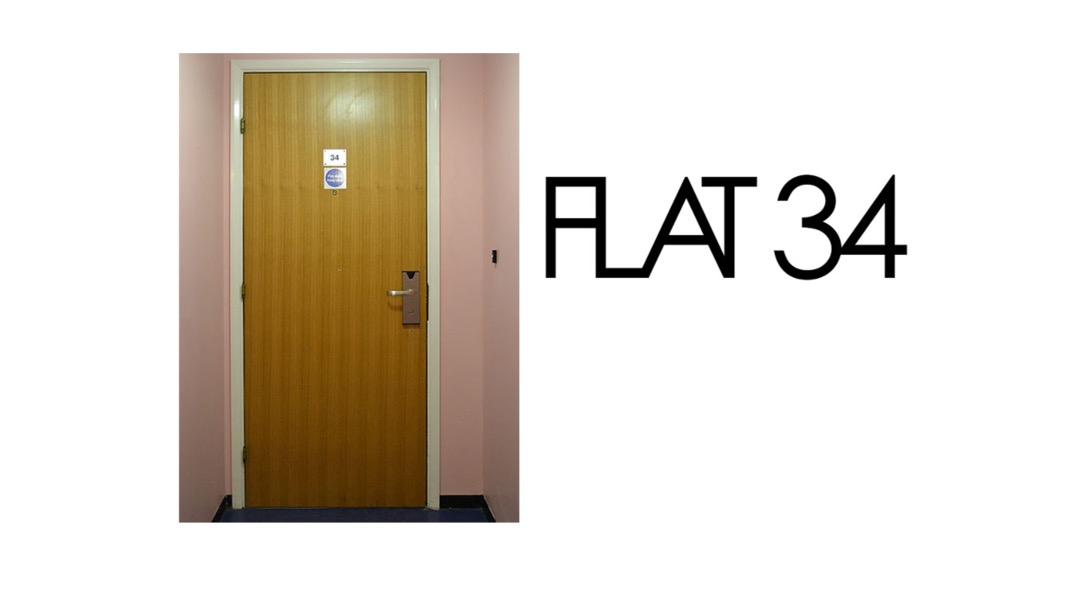
Starting with her work on FLAT34, a gallery which opened in student dormitories, Breure spoke about each notable project she has been involved in and how, in each case, she navigated the challenges of institutional boundaries. The speakers spent time discussing her radical “100 Days House” policy for Veem House for Performance. After receiving significantly less funding for the house, Breure made the decision to only open for one hundred days of the year prioritising quality over quantity. While other institutes may have pushed through the year with this lesser budget masking their struggles, Veem House for Performance loudly announced their new schedule as Breure wanted to make the struggles faced by creatives visible to the public and fund decision makers. Responses were generally positive however not always in the ways that the performance house would have liked, with some praising the “100 Days House” as a smart business idea instead of appreciating the statement made by the institute. The seminar used this topic to discuss how we can make what the cultural sector is doing more visible.
Theatre Utrecht
As the creative director of Theatre Utrecht, Breure has developed an inspired new plan for the company. Out of all the things Breure spoke about the audience seemed most intrigued by her hiring a dramaturge, not for the performances, but for the company. The dramaturge’s role is to give feedback for the making progress of the institute, including but not limited to, its narrative, values, and goals. Breure sees this person a necessity for a “building together” that is part of the day-to-day consciousness. She things that all systems need a dramaturge to see what is happening and how to change it. Bleeker mentions the choice of the kind of work that Theatre Utrecht stages make it clear that the institute is different that what is usually seen from big stage theatre and shows other that big stage theatre can be this other thing by pushing boundaries.
The last notable discussion prior to the Q&A was about the idea that entanglements go further than just the institution itself. Breure remarks that policies which are not written into the institutional law can be pushed through however it is the public assumptions that are harder to push through. One must understand the institution, how it functions and its entanglements to be able to push the barrier forward.
Q&A
Rounding off the seminar, Breure answered questions from the audience. When asked about what happens when she encounters resistance to her changes within institutes, she explained that she does not go too fast with radical change in larger institutions and instead is informed by the resistance and where it comes from. She sees institutional change as hacking the system; looking at what is there and how to go around it.
References
Fraser, Andrea. 2005. “From the Critique of Institutions to an Institution of Critique,” in Artforum, September. https://www.artforum.com/features/from-the-critique-of-institutions-to-an-institution-of-critique-172201/