Documentation
“The Web We Roam: Crafting Institutional Life” — Jilke van der Kolk
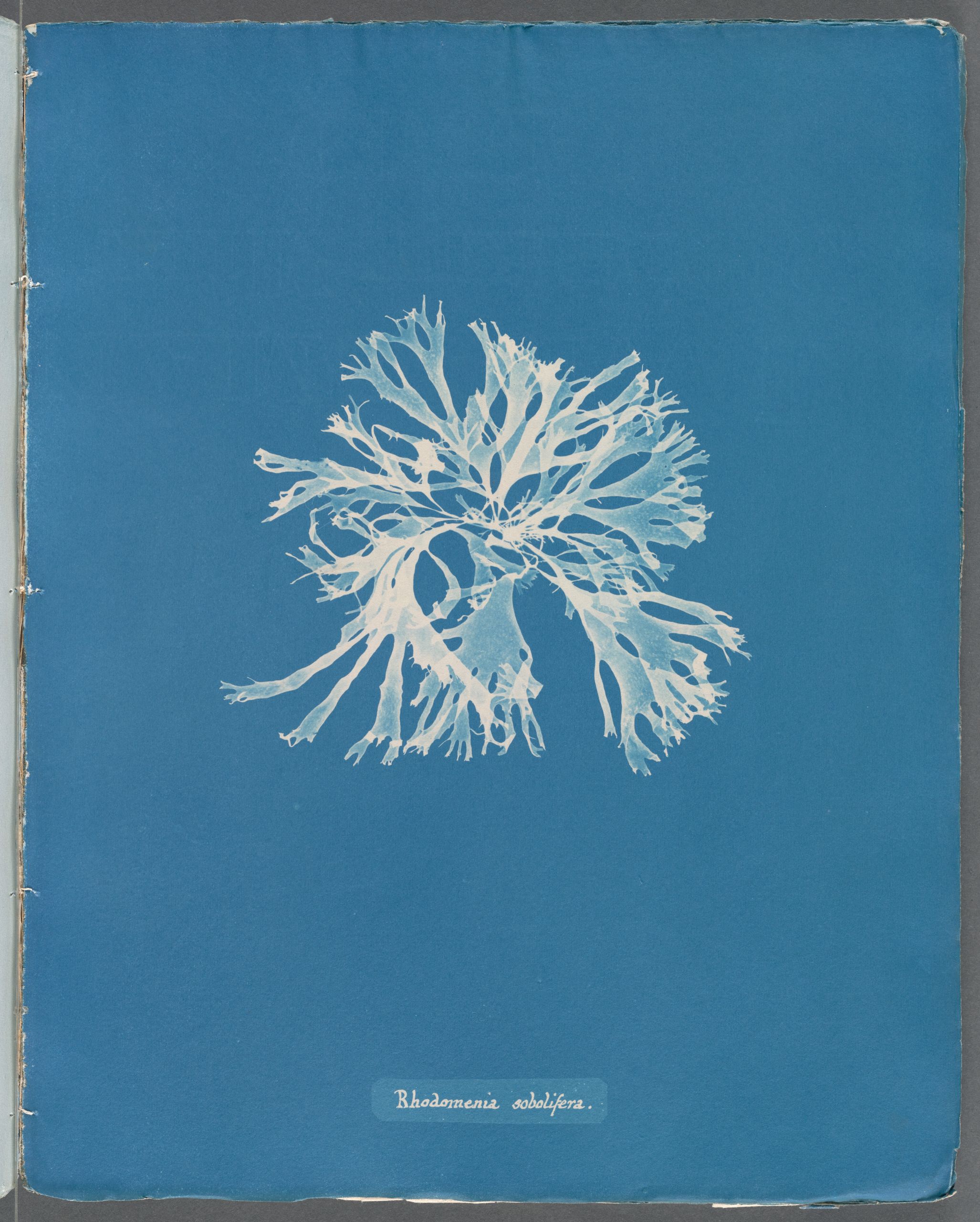
Rhodomenia sobolifera. Source: Spencer Collection, New York Public Library Digital Collections.
Institutions are often understood as fixed and abstract entities. They appear as stable structures shaped by policy and established procedures, leaving little room for imagination or creative intervention. From this perspective, institutions seem distant from artistic practice and resistant to change. During the Transmission in Motion seminar “On Institutionalizing Differently,” Anne Breure unsettled this view by approaching institutional work itself as a creative practice. She presented limitation and interdependence as opportunities, conditions through which institutional life unfolds. The institutional web that Breure describes resembles an ecology of interwoven relations, where meaning emerges through connection. Her reflections resonated strongly with Donna Haraway’s call to “stay with the trouble,” (2016) understood here as an invitation to remain with complexity instead of striving for coherence or closure.
Breure’s 100-day model at Veem House for Performance clearly illustrates this approach. Despite receiving positive evaluations, Veem did not secure additional funding. This made it impossible for the organization to continue operating in what it viewed as responsible conditions. In response, Breure and her team decided to restructure time itself. Veem would remain closed for 200 days each year and operate intensively during the remaining 100. This choice revealed the institution’s fragility instead of hiding it. Scarcity became an organizing principle that influenced both artistic programming and working conditions. The institution openly acknowledged its own limitations, turning precarity into a method. The focused program created urgency and drew attention while ensuring fair labour practices. In doing this, Veem questioned the belief that sustainability requires constant productivity.
For Haraway, responsibility comes from engaging with complex conditions and limited agency. The Veem model supports this logic. Financial pressure wasn’t resolved or shifted elsewhere in the system; it was made visible and shared, showing that institutional strain was already present. Breure noted that these issues go beyond individual organizations and are rooted in wider funding and expectation infrastructures. Leadership, in this context, means navigation. It requires awareness of the relationships that shape what is possible and what is not. This approach continues in Breure’s role as creative director of Theater Utrecht. She sees the institution as a changing ecology, situated within a complex network of artistic, financial, and political relations. By collaborating with an in-house dramaturg who examines institutional systems alongside artistic processes, Theater Utrecht treats structure itself as material. Assumptions and funding frameworks become integral to the practice. Institution building is, in this case, seen as relational and ongoing. It develops through collaboration and remains resistant to full control, expanding the principles from Veem on a larger scale.
Reflecting on Breure’s practice emphasizes institutional responsibility as both an ethical and creative task. Within the context of Transmission in Motion, this raises questions about our own institutional environments, including the university. What would it mean to see the university as a performance shaped by collective values? In a time marked by precarity and budget cuts, Breure’s work suggests that navigating these complexities requires a readiness to engage with institutional trouble and to view it as a place of thought and opportunity.
References
Haraway, Donna J. 2016. Staying with the Trouble: Making Kin in the Chthulucene. Durham: Duke University Press.
Theater Utrecht. 2026. “About Us.” Accessed February 4, 2026. https://www.theaterutrecht.nl/en/about-us.
Theaterkrant. 2017. “Veem Beperkt Zich Tot 100 Dagen.” September 2017. Accessed February 4, 2026. https://www.theaterkrant.nl/nieuws/veem-beperkt-zich-tot-100-dagen/.