
Documentation
“Object Orientation: Initiating Interdisciplinary Conversation from an Object” – Jenny Chan

Orra White Hitchcock. 1828-40. Drawing of contortions in clay beds, Deerfield, Massachusetts. Via: Public Domain Image Archive Source: Amherst College.
In the workshop “Frogs and Clowns: An Object Orientation of Protest Today”, Anneke Jansen (Theatre Programming, SPOT Groningen) and Iris van der Tuin (Utrecht University) introduced ‘object orientation’ as a collaborative method that initiates interdisciplinary conversations. By using an object as a starting point, researchers collectively reflect on what kinds of perspectives arise from their own disciplinary thinking. In this workshop, we focused on clowning objects that are often used in protests in the United States today. In this blog post, I will illustrate how an interdisciplinary conversation arose within my group – composed of three master’s students, a PhD student, and a professor from different disciplines. Specifically, I will explain how we mapped out and communicated our disciplinary perspectives, while experiencing puzzlement, connection, and tension at the same time.
We were first asked to reflect on ‘what questions does my discipline, specialization, or perspective ask about the object?’. When we were holding our chosen object, a unicorn onesie, our first responses were affective and sensory. These responses were prompted by the colourful and fluffy outfit, and words such as ‘theatrical’, ‘comfort’, ‘safety’, ‘eye-catching’ came up. To move toward a more analytical and theoretical direction, we used the guiding question to re-orient our first responses and think about how they were connected to concepts in our own fields. As a result, more disciplinary keywords were suggested by our groupmates: for example, ‘carnivalesque’ and ‘grotesque’ from cultural and media studies, and ‘self’ from philosophy. At this phase, we were navigating how to connect our reaction to the unicorn onesie with our disciplines.
Then, we were asked to illustrate our disciplinary perspective on a pie diagram (see Figure 1). The set of guiding keywords (i.e. methods, theories, concepts vocabulary, assumptions, epistemology, and phenomena) suggested by van der Tuin were particularly useful for dissecting our perspectives and reflecting on how they were formulated. For some of us, the assumptions that underlying our perspectives surfaced – one of us assumed that a protest was a scene that could be visually captured and analysed, and another groupmate assumed that connections existed between the object and its surroundings. By approaching our perspectives with the guiding keywords, we were able to identify how they were formulated.
In the next step, van der Tuin instructed us to ‘interlink what’s in the spiderweb’. First, we observed obvious similarities that were shared in our individual parts; for example, adjacent words such as ‘stage’, ‘fiction’, ‘narrative’, ‘story’ were used. Then, we spotted more differences and tension between our perspectives. For example, while one of us thought that object and its surroundings were intertwined as a narrative, another groupmate thought that connections were not necessarily rhetorical. Also, a groupmate focused on the individual person in protests – particularly their metamorphosis and experience, which created a tension with another groupmate’s view that the onesie wearer was part of a larger discourse.
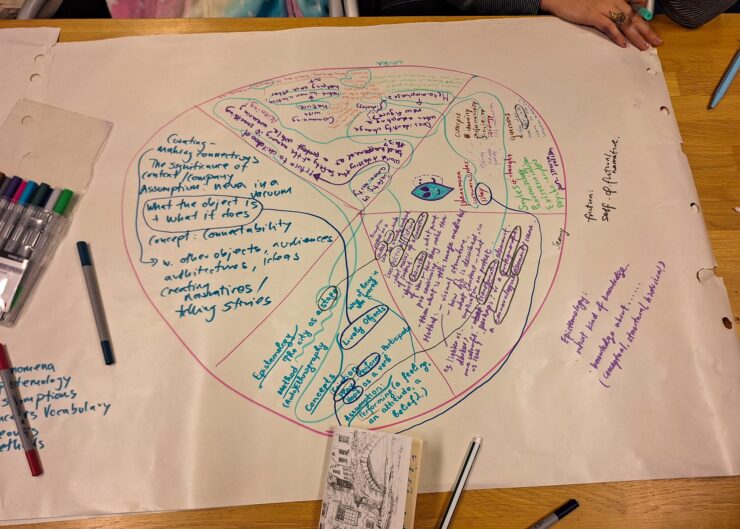
Figure 1: Our perspectives in a pie diagram
Our interdisciplinary conversation shows that there are multiple perspectives and methods to approach the same object. When we reflected on them at the end of the workshop, it appeared that we had positioned ourselves as observers of the object and the protest, remaining disembodied from what we were analysing. Due to time constraints, we did not discuss our positionings in analyses. As we began our interdisciplinary conversation from affective and sensory responses to an object, it would have been fruitful to conclude our discussion with the embodied situatedness of our analytical lens.
References
Jansen, Anneke, and Iris van der Tuin. “Frogs and Clowns: An Object Orientation of Protest Today.” Workshop, Utrecht University, November 12, 2025.