
Seminar Blogs

“Performing the Forgotten Knowledge Through Digital Means” – Justina Jakubiec
The story of the riots that took place in Cardiff in 1919 leaves a lot to be desired. However cruel and prejudiced the affairs were, a recreation of the story turns out to be possible only on the basis of reports in local newspapers from that time. An aim to create a novel that would,…
Read more
“What Do We Need History For?” – Hymke Theunissen
On the 16th of December, I was not sitting in my living room and watching my laptop screen. I was not aware of the time or what I was going to make for dinner. Mentally, I was walking somewhere in Cardiff in 1919. I was surrounded by characters of a story formed by the voice…
Read more
“In Your Mind’s Eye: From Mike Pearson’s Retraced and Redrawn to True-Crime Podcasts” – Naomi Tidball
“The strands were very thin, this is partly due to date (100yrs ago), so the circumstances were difficult. The local historian of the town—who were victims of this riot—they have a very developed account of how the rioters came into the house. It is difficult to get the particulars of the accounts.” (Pearson 2020) From…
Read more
“Live-tweeting the Cardiff Riots of 1919” – Polyniki Katrantsioti
An important factor concerning the work of Kyle Legall, Cardiff 1919: Riots Redrawn is that they were never extensively covered in history, despite the fact that they had a detrimental effect on the Welsh population. To further reinforce this lack of historical appreciation comes the fact that the Cardiff Riots are not taught in schools,…
Read more
“Cardiff 1919: Reconstructing Memory” – Soyun Jang
Mike Pearson, Professor Emeritus of Performance Studies at Aberystwyth University, has been working with National Theatre Wales and a number of artists to record the race riot that startled Cardiff for four days and night in mid-June 1919 – an event described as a “violent mayhem that left three dead, many in hospital, and buildings…
Read more
“Branching Storytelling and Speculative Realism” – Liang Yue
After watching the registration of Estado Vegetal, the voice of the plant still lingered in my head. The “I can’t move” expression and the resonant voice subtly contrasts the plant’s two properties: still and kinetic. Manuela Infante, the scriptwriter and director of this show, shared her exploration of branching storytelling strategy and speculative realism during…
Read more
Guest blog: “Does she belong here?” – Nicoleta Cîrlig
Does she belong there? An introspection into the concept of nature from the point of view of a child who grew up in an agrarian country’s capital city drawing on Manuela Infante’s Estado Vegetal The idea that nature is a construct and that it might be a scary medium, as I paraphrase how Manuela Infante…
Read more
Guest blog: “If I were a plant, would I…” – Rowan Groes
As of writing this article it has been almost nine months since the first official announcement of a partial lockdown in The Netherlands, due to the still ongoing COVID-19 pandemic. As a freelancer in the event industry and a master student at Utrecht University, it has been, as for many others an interesting time. Not…
Read more
“Locally-Sourced, Organic Music” – Hannah Harder
Manuela Infante refers to her play, Estado Vegetal, as performing plant-thinking through polyphonic aesthetics. Being a musician, Infante stresses the importance of rhythmic dialogue as a marker of the plantedness. I am caught on the audibility of plant aesthetics. It is easy to visualize a plant’s physicality, as one can conjure images of roots and…
Read more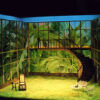
“Destabilizing Anthropocentrism in the Theater” – Elena Roznovan
What struck me about Manuela Infante’s Plant Dramaturgy is the structural and processual decisions made to decentralize anthropocentrism so common in the cannon of theater. From the point of view of a playwright and director, Infante pushes the envelope of what theater is while simultaneously using the theater setting as a kind of laboratory in…
Read more