
Documentation
[TiM Recap] “Griefbots in Research and on the Stage”—Ulrike Quade (Ulrike Quade Company), Sorcha Ní Bhraonáin (Ulrike Quade Company), and Evelyn Wan (Utrecht University)”
by Tom Watkins
This seminar “Griefbots in Research and on Stage” explored the relationship between grief, digital technologies, and performance through the theatre production Roman & ELIZA by Ulrike Quade Company. The session consisted of three presentations, followed by a participatory artistic planning exercise and a concluding discussion. Sorcha Ní Bhraonáin opened by situating griefbots within longer histories of death, mediation, and technological preservation. Ulrike Quade then discussed the making of Roman & ELIZA and the performance’s use of puppetry, scenography, and digital technologies. Evelyn Wan closed by broadening the discussion of grief beyond bereavement after death, asking whose grief becomes visible, recognizable, and technically supported in the first place. After the presentations, Laura Karreman invited participants to form small groups and imagine how griefbots might be designed, staged, or critically rethought.
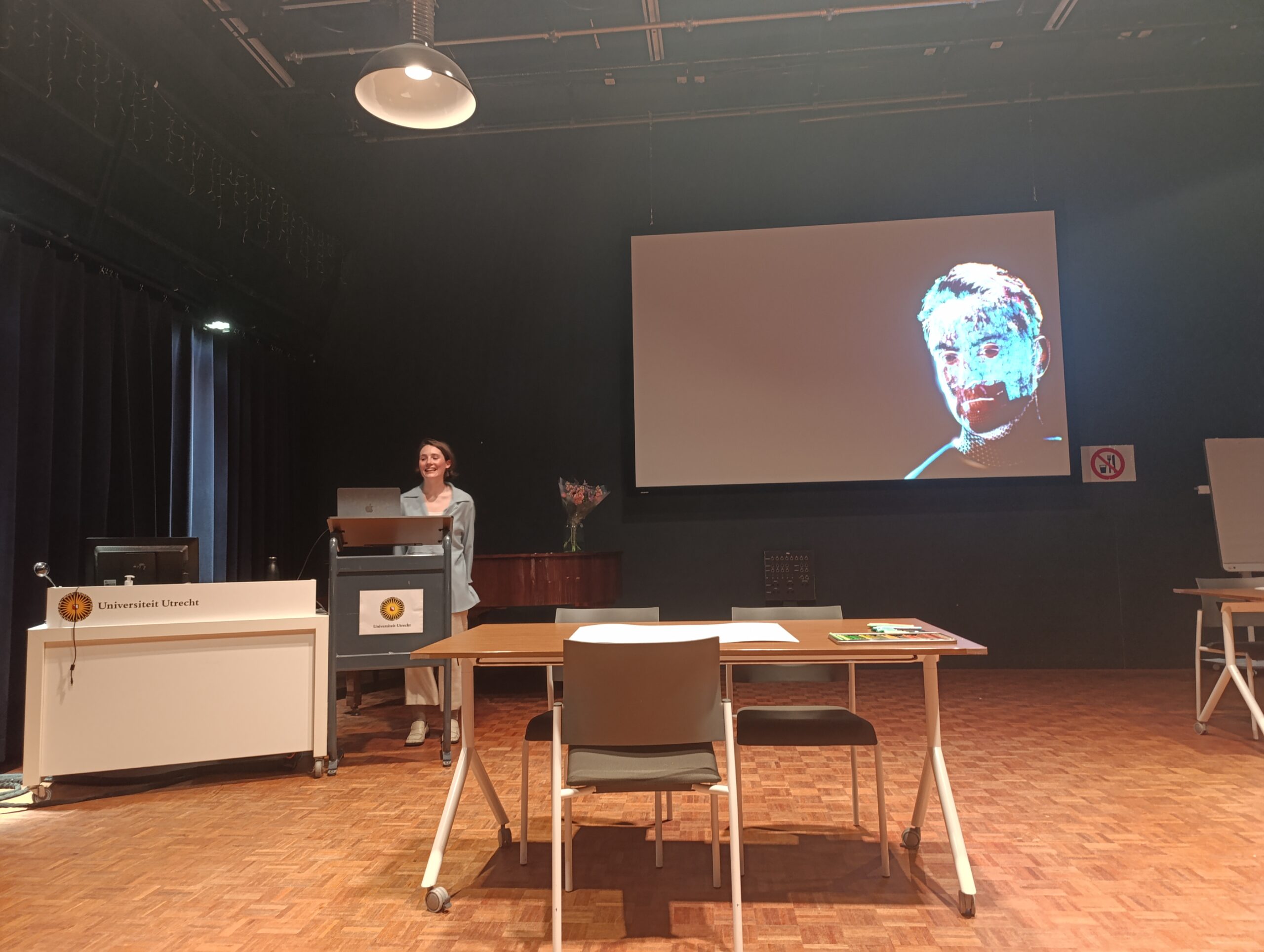
Ní Bhraonáin framed griefbots within an entanglement between technology and death, connecting contemporary grief technologies to post-mortem photography and embalming, practices that extend the presence of the dead. Drawing on death studies and digital media, she presented griefbots as phenomena that reorganize relations between memory, mourning, data, and spectatorship. Continuing bonds theory was important because it challenged the Western belief that bereavement requires detachment from the deceased. Mourning may instead involve maintaining transformed relations with the dead (Klass 2018). She discussed speculative design as a method for thinking through technological futures.
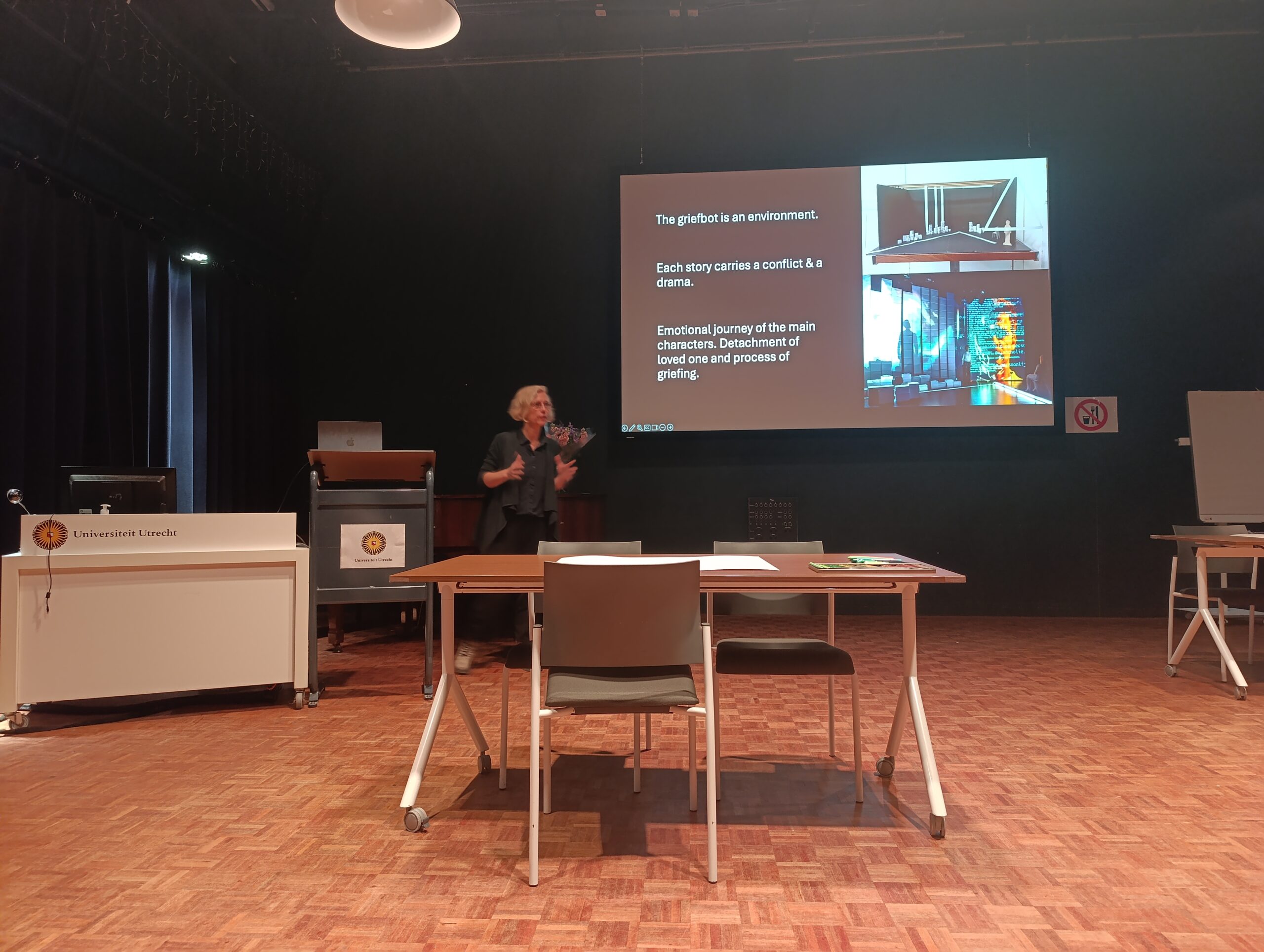
Quade’s presentation shifted from theory to theatrical practice. The performance Roman & ELIZA stages Roman, the deceased; Charly, the living partner; and ELIZA, the chatbot through which Roman’s digital presence is reconstructed. Its reversal of theatrical embodiment is striking: Charly is represented through a puppet, while Roman is embodied by the only human performer on stage. This destabilizes distinctions between life and death, human and machine, presence and absence. ELIZA is not presented merely as a text-based chatbot, but as a spatial, theatrical, and affective environment through which grief is enacted.
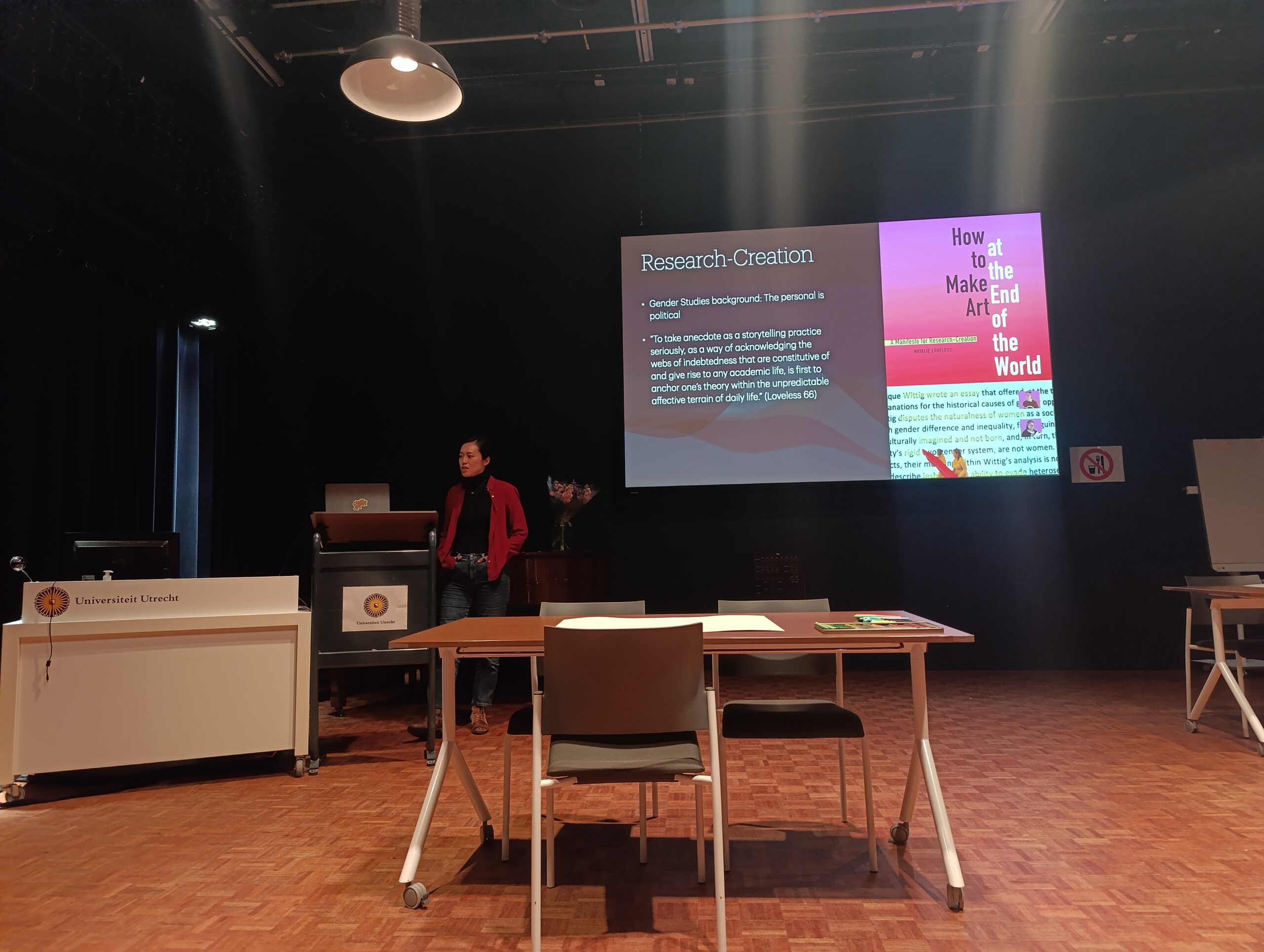
Wan broadened the scope by asking what forms of grief are recognized by digital technologies, and which subjects, cultures, communities, and socio-economic backgrounds are made visible through digital archives. While griefbots may offer some users a final connection, she emphasized the discomfort of deception and the uneven conditions under which grief technologies become available. The question is not only what grief can be expressed through technology, but who can negotiate grief through such systems at all.
The small-group discussion focused on the tension between collective and individualized grief. Grieving is often social, shaped by family, ritual, community, and shared memory, while chatbot interaction is frequently imagined as private. Our group discussed offline grief practices, platform-based memorialization, and a liberal-capitalist grieving market in which companies may store and control sensitive personal data. This was echoed in Roman & ELIZA when Charly’s mourning is interrupted by advertisements to upgrade her subscription model. In the final discussion, Ní Bhraonáin returned to Roman & ELIZA as a performance environment rather than a keyboard-and-screen chatbot scenario, asking how grief technologies might acknowledge mourning as social and collective.
References
Klass, Dennis, and Edith Steffen, eds. 2018. Continuing Bonds in Bereavement : New Directions for Research and Practice. Milton Park, Abingdon, Oxon: Routledge. http://www.myilibrary.com?id=1051702.