
Documentation
[TiM Recap] “Frogs and Clowns: An Object Orientation of Protest Today” — Anneke Jansen (SPOT Groningen) and Iris van der Tuin (Utrecht University)
by Ani Encheva
“The multiple dimensions that make up objects also make up ourselves, as well as our categories. Telling the stories of an object therefore begins unpacking our own clichés, our certainties, our affects.”
– Joseph Dumit (2014, 349)
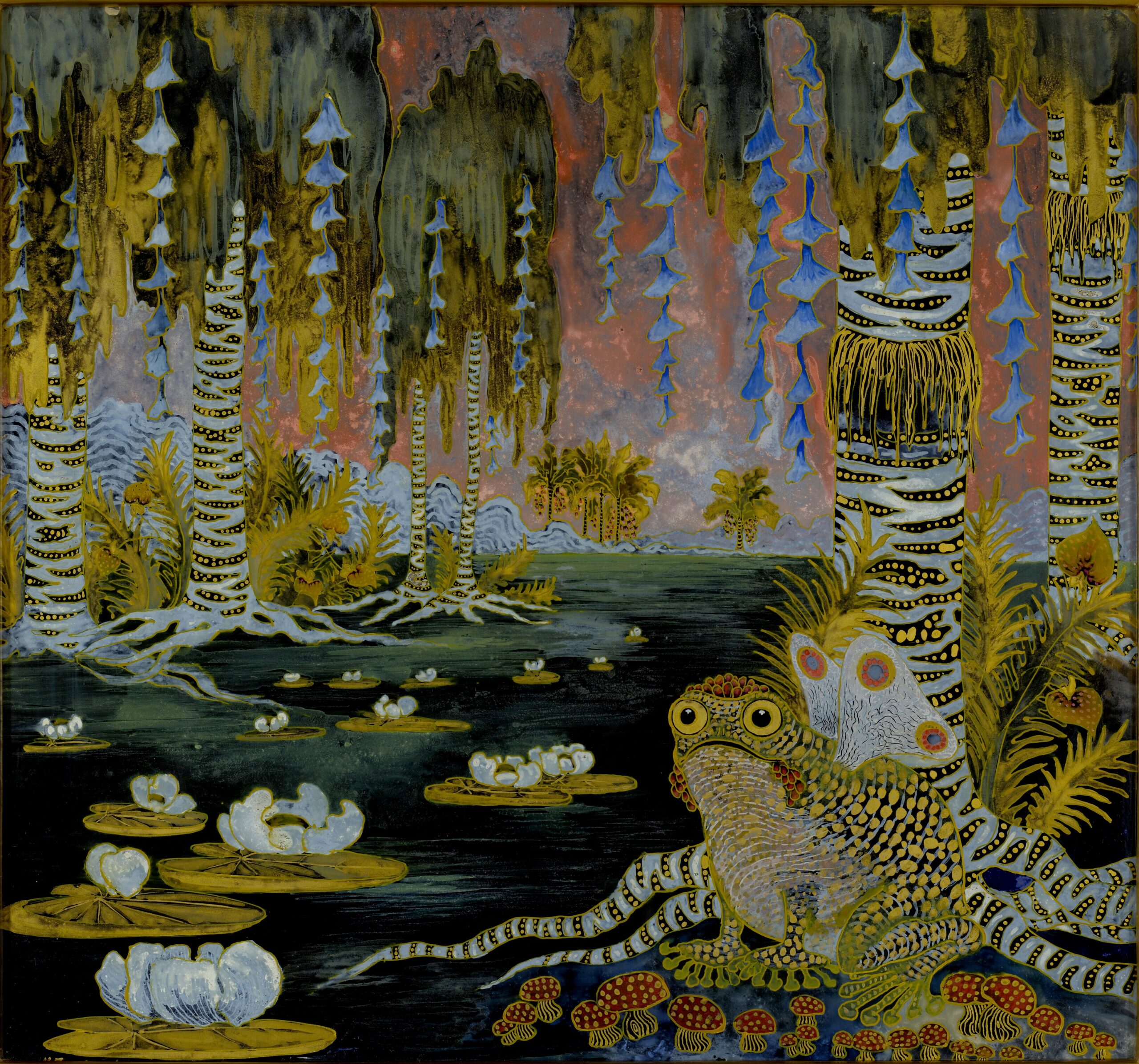
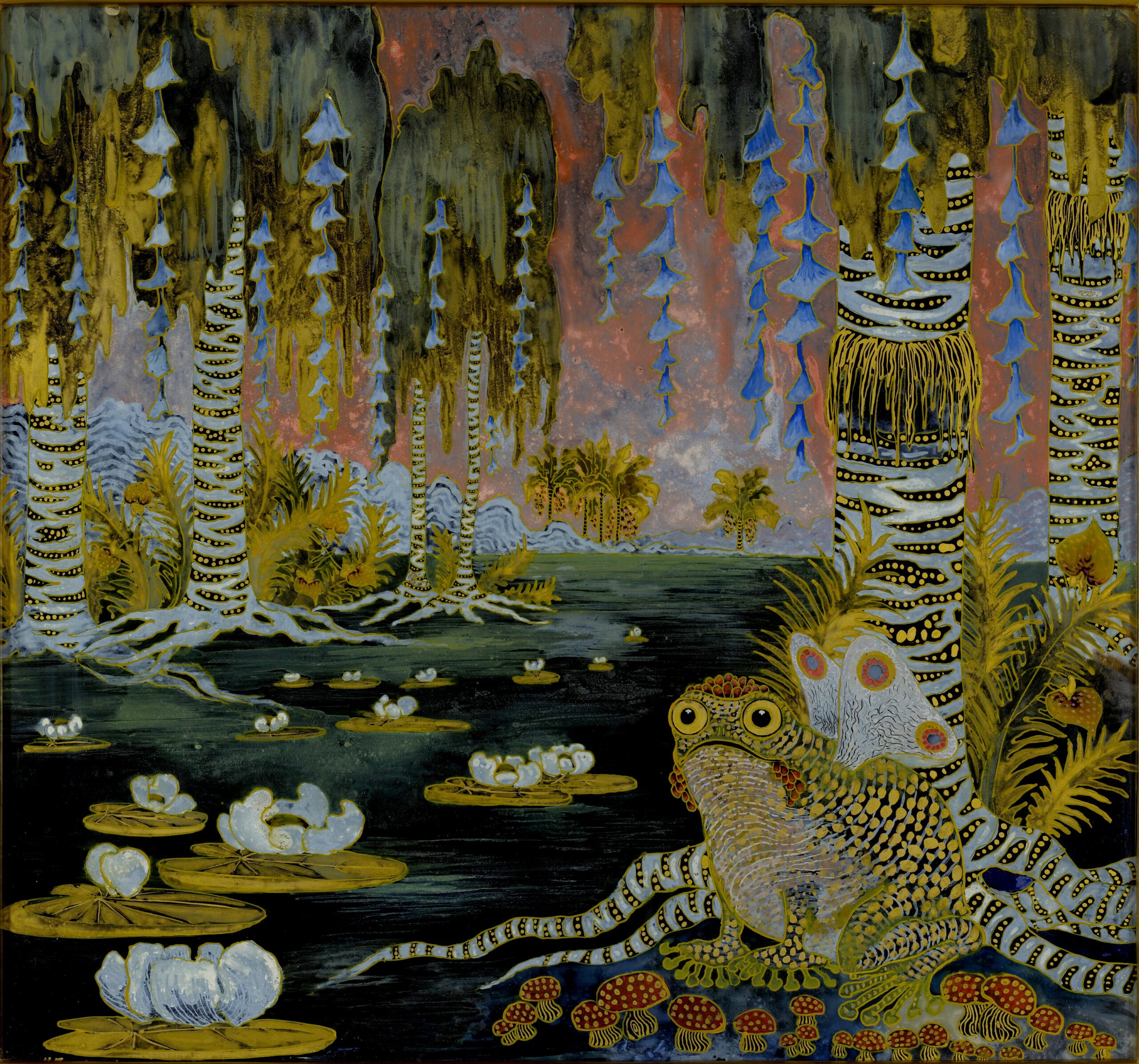
Michalina Janoszanka, Wiosna (Spring), ca. 1920-1926. Via: Public Domain Image Archive. Source: National Museum in Krakow.
In encountering the inflatable frogs and clowning artefacts that populate contemporary protest, we are invited to trace the multiple dimensions that compose these objects and, through that very act, to unravel the very dimensions that simultaneously compose us, as well as our entanglements with agents, disciplines, and broader phenomena. This invitation shaped the opening seminar of the 2025-2026 Transmission in Motion series, dedicated to the theme of “Navigating Entanglements.” Held on November 12, 2025, in Drift 13 under the title of “Frogs and Clowns: An Object Orientation of Protest Today,” the seminar brought together Anneke Jansen, performing-arts programmer at SPOT Groningen, and Iris van der Tuin, Professor of Theory of Cultural Inquiry at Utrecht University. Through a concise introduction to the method of object orientation, followed by a hands-on workshop and plenary exchange of reflections, Jansen and van der Tuin demonstrated how this integrative method can guide us through the dense, often messy entanglements in which we find ourselves implicated.
On the Method of Object Orientation
The seminar opened with van der Tuin’s introduction to object orientation, a method originating in Joseph Dumit’s (2014) work, most notably his “Implosion Project.” At the heart of Dumit’s “Implosion Project” is a collective exploration of the entanglements between “objects, facts, actions, and people in the world and the world in them,” pursued by tracing the relational maps that unfold across dimensions such as labor, epistemology, materiality, technology, situatedness, politics, economics, text, embodiment, history, particles, education, mythology, and symbolism (Dumit 2014, 350–52).
Van der Tuin placed Dumit’s approach into conversation with Barbara Bolt’s (2019) work on how conceptual framing shapes the questions asked of an object and with Anne-Françoise Schmid’s (2012) work on complex and integrative objects. The seminar’s modus operandi also drew inspiration from Gillina Bezemer and Koen Leurs’ (2024) articulation of object orientation as a student-intensive, pressure-cooker methodology for disciplinary grounding and perspective-taking. From the outset, then, object orientation was positioned not simply as a method but as a care-fully assembled constellation of interdisciplinary lineages.
Disentangling, Sharing, and Interlinking Disciplinary Perspectives
With this conceptual grounding in place, the seminar shifted into hands-on engagement. Drawing on Schmid’s formulation of complex objects, Jansen introduced the workshop’s departing object, namely the inflatable frog costumes that gained popularity at ICE protest sites in the United States. This provided only one entry point among many; participants also engaged with a unicorn onesie, face paints, a fan, a red clown nose, and a mediated image of the inflatable frog costume.
The workshop’s first trajectory invited participants—gathered in small groups—to disentangle and share the disciplinary perspectives they brought to the chosen object. At stake was the recognition that an object, shaped by many different hands, navigates entanglements. Echoing Dumit, group discussions foregrounded how seeing is always diffractive, always conditioned by “eyes that are themselves devices with histories of their own” (2014, 348).
After each group had articulated its constellation of disciplinary orientations, the next trajectory involved populating a pie-like spiderweb. Each participant filled a segment with the perspectives they brought, attending to relevant phenomena, epistemologies, assumptions, concepts, vocabularies, theories, and methods. The third trajectory then invited participants to interlink these segments, tracing connective threads across the disciplinary dimensions assembled in the spiderweb. Gradually, these individual orientations folded into shared, relational, interdisciplinary maps (Figures 1 & 2).
Articulating a Shared Horizon
The workshop’s final trajectory centered on articulating a shared horizon. In the plenary reflections, several such horizons emerged. Participants spoke of how the method of object orientation opened them to their response-ability for, accountability to, and implicatedness in the world; how it rendered visible connections they might not have perceived on their own, or without the diffractive lens this method affords; and how the entire process cultivated a mode of critical-cultural reflexivity, a way of thinking with and through objects to bring perspectives in relation. As one participant articulated near the end, the seminar attuned us to the recognition that we all navigate a shared mess—knotted differently, sometimes painfully, textured by friction and hierarchy—yet nonetheless entangled and cutting across the worlds of which we are part.
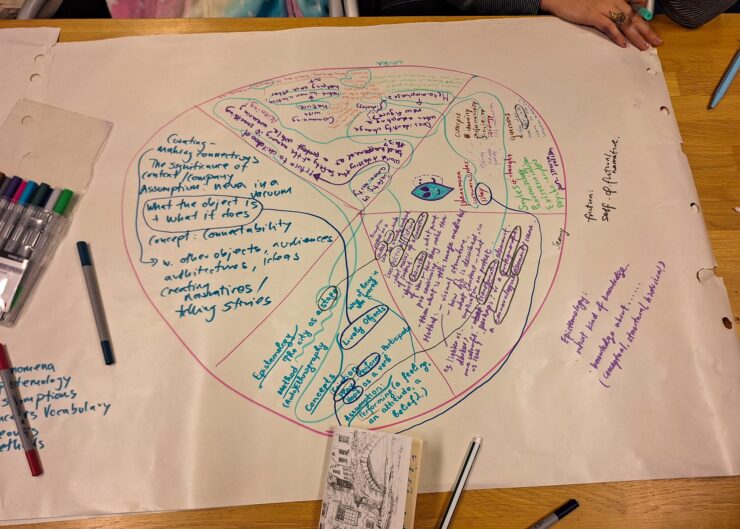
Figure 1: Spiderweb I at the Transmission in Motion Seminar “Frogs and Clowns: An Object Orientation of Protest Today” with Anneke Jansen and Iris van der Tuin at Drift 13 (Utrecht University), 12th November 2025.
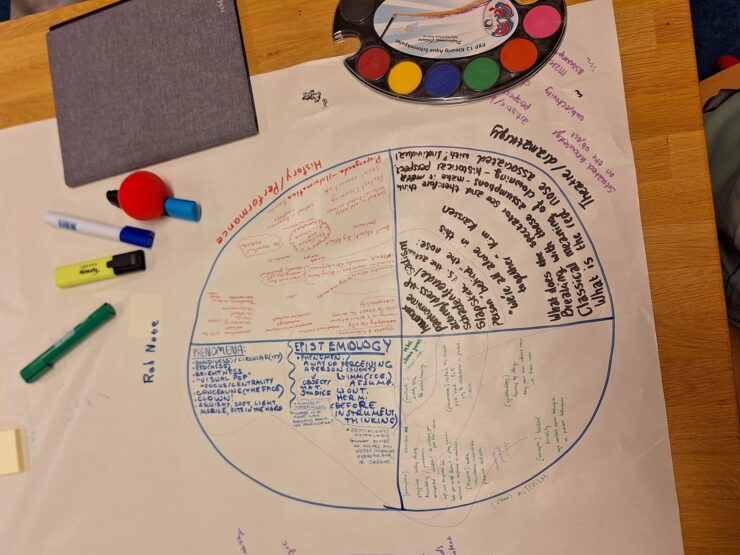
Figure 2: Spiderweb II at the Transmission in Motion Seminar “Frogs and Clowns: An Object Orientation of Protest Today” with Anneke Jansen and Iris van der Tuin at Drift 13 (Utrecht University), 12th November 2025.
References
Bolt, Barbara. 2019. “When Is a Red Shoe not a Red Shoe? Conceptual Framing and the Consequences for the ‘Object’ in Visual Research.” In Provoking the Field: International Perspectives on Visual Arts PhDs in Education, edited by Anita Sinner, Rita L. Irwin, and Jeff Adams, 81–92. Bristol and Chicago: Intellect. https://doi.org/10.2307/j.ctv36xvn1m.10.
Dumit, Joseph. 2014. “Writing the Implosion: Teaching the World One Thing at a Time.” Cultural Anthropology 29(2): 344–62. https://doi.org/10.14506/ca29.2.09.
Programma Interdisciplinair Onderwijs. 2024. “Pressure Cooker Object Orientation: An Introduction to Object Orientation as a Student-Intensive Methodology for Disciplinary Grounding and Perspective Taking.” Edusources. Accessed November 20, 2025. https://edusources.nl/materials/59e77c08-9dd7-499d-b526-fd19f6db8666/pressure-cooker-object-orientation?tab=0.
Schmid, Anne-Françoise. 2012. “On Contemporary Objects.” Primer. Accessed November 20, 2025. https://primer.dk/Projects/Ripe/Anne-Francoise-Schmid-On-Contemporary-Objects-2012.