
Documentation
“Against or With Power? Humour, Truth, and Subversion in Contemporary Stand-Up Comedy” — Agata Kok
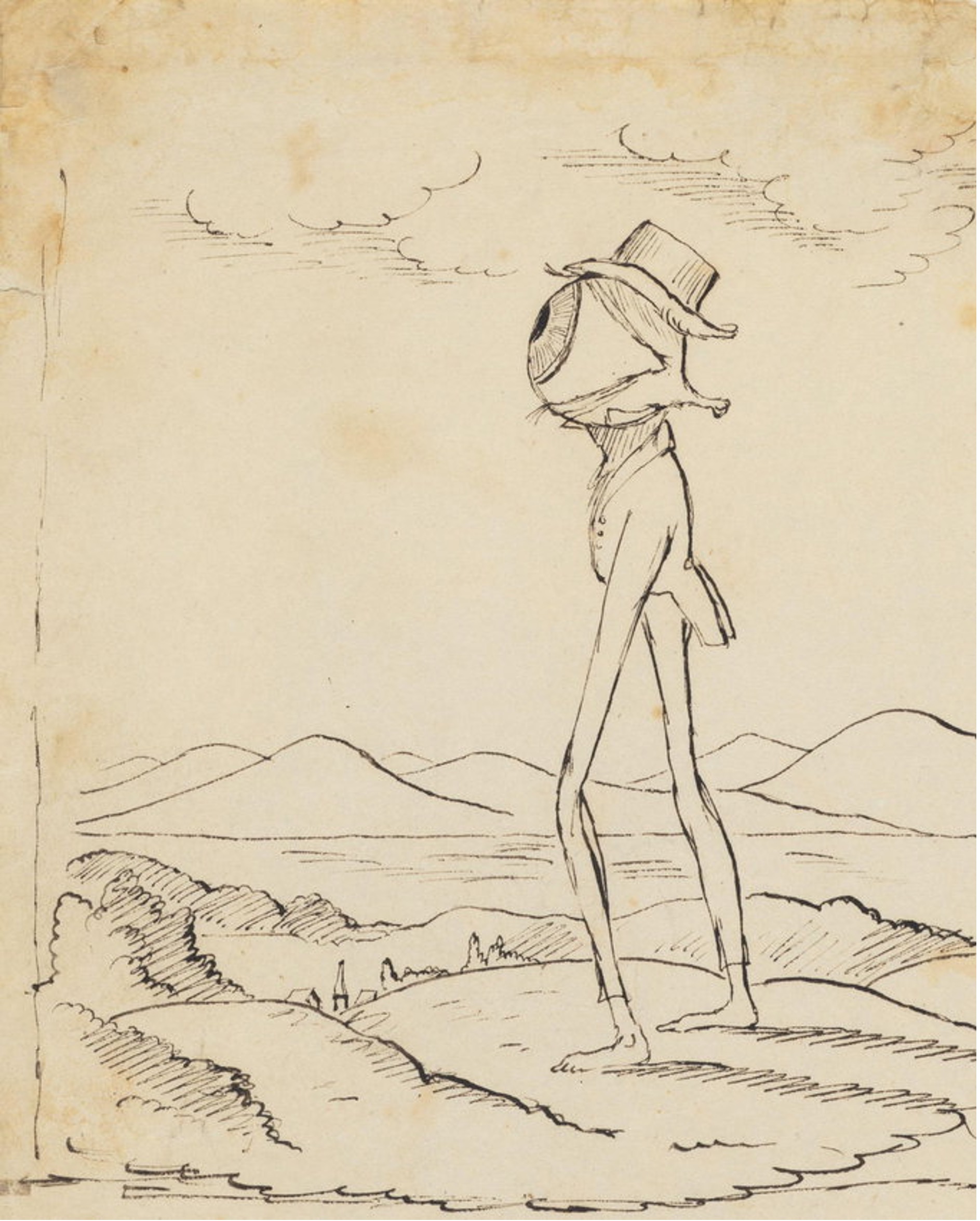
Christopher Pearse Cranch, illustration to Emerson’s Nature captioned “Standing on the bare ground, – my head bathed by the blithe air, & uplifted into infinite space, – all mean egotism vanished. I become a Transparent Eyeball”, ca. 1837–39. Source: Wikimedia Commons.
_-_Cranch,_edit.jpg)
“If particular comedians are recognized as truth-tellers, does that imply that comedic speech may also lack truth?” (Zijp 2026). This central question, posed by Dr Dick Zijp in the seminar “Navigating Entanglements in Stand-Up Comedy: Humour, Truth-telling, and Situated Knowledges,” identifies a key tension shaping contemporary stand-up comedy: the collision of different “truth-regimes.” Drawing on standpoint theory and the concept of situated knowledges, Zijp argues for “an intersectional analysis of the interlocking systems of oppression that shape a speaker’s social position, access to particular forms of knowledge, and relationship to systems of power” (Zijp 2026).
Standpoint theory posits that knowledge is always produced from a specific social position, and that marginalized perspectives can reveal structural dynamics obscured from dominant viewpoints. Similarly, situated knowledge challenges the illusion of objectivity by emphasizing that all claims to truth are embedded within particular contexts. This framework rejects the notion of a universal, detached observer, what Donna Haraway famously critiques as “the god trick of seeing everything from nowhere”(1998, 581), arguing instead that so-called objectivity often masks its own partiality. Importantly, this does not imply a slide into relativism. Situated knowledge does not suggest that all perspectives are equally valid; rather, it calls for a critical evaluation of how power shapes the production and reception of truth claims. This distinction is crucial when considering satire as a political strategy. If satire can be mobilized by both dominant and marginalized actors, its subversive capacity becomes contingent rather than guaranteed.
Within this framework, contemporary stand-up comedy emerges as a site where two “truth regimes” clash. Traditionally associated with subversion, stand-up has often been understood as a platform for marginalized voices to challenge hegemonic norms. However, Zijp highlights how this subversive potential is not inherent to the genre itself. When comedic forms are appropriated by individuals occupying dominant social positions, their critical edge may be neutralized. Rather than destabilizing power structures, such performances can reinforce them, cloaking dominant perspectives in the guise of irreverence or irony.
This raises pressing questions in the current media landscape, where satire is increasingly entangled with political performance. The figure of the comedian can be associated with parrhesia, a practice of speaking truth to power, often at personal risk. Like the court jester, the comedian occupies a liminal space, granted a degree of protection that enables candid critique. Yet parrhesia is defined not only by frankness but also by its direction: it is oriented upward, challenging authority rather than targeting those with less power. In an era of so-called ‘clown politicians,’ the boundaries between satire and governance become blurred. This complicates the assumption that humor inherently disrupts power. If those in positions of authority present themselves as embattled outsiders, claiming victimhood while wielding substantial institutional and financial power, the dynamics of critique are inverted.
Consequently, evaluating the subversive potential of comedy today requires attention not only to content but to context: who is speaking, from which position, and with what institutional backing. In the age of global streaming platforms and algorithmically amplified visibility, these questions become even more urgent. Humour cannot, therefore, be disentangled from the broader structures of power in which it circulates.
References
Haraway, Donna J. 1988. “Situated Knowledges: The Science Question in Feminism and the Privilege of Partial Perspective.” Feminist Studies 14(3): 575–599.
Zijp, Dick. ” Navigating Entanglements in Stand-Up Comedy: Humour, Truth-telling, and Situated Knowledges.” Transmission in Motion Seminar. Lecture at Utrecht University, March 25, 2026.